Thursday, September 18, 2025

Sleeping Calories Burned | Calculator, Formula & Facts

Sleep Calories Burned Calculator

Calculate how many calories you burn while sleeping. Enter your weight, select your sleep state, and input your sleep duration for accurate results.

kg
hours

How Many Calories Do You Burn While Sleeping?

Did you know your body continues to burn calories even while you sleep? According to sleep research, your body performs essential functions during rest that require energy. Let's explore how your nightly rest contributes to your daily calorie burn.

Know About Sleep Energy Expenditure

Sleep Intensity Levels 📊

Based on metabolic studies, sleep stages affect calorie burn differently:

  • Light Sleep: 1.0-1.2 METs
  • Deep Sleep: 0.9-1.0 METs
  • REM Sleep: 1.1-1.3 METs

Health Benefits 🌟

Quality sleep, as detailed in health research, provides multiple advantages:

  • Supports metabolic health
  • Aids muscle recovery
  • Regulates hormones
  • Enhances weight management

Calorie Burn Guide

Sleep Duration Light Sleeper Average Sleeper Deep Sleeper
6 Hours 240-280 calories 260-300 calories 280-320 calories
7 Hours 280-320 calories 300-350 calories 320-370 calories
8 Hours 320-370 calories 350-400 calories 370-420 calories
← Slide to view more →

*Calorie estimates based on a 160-pound person. Adjust for your weight using our calorie calculator.

Factors Affecting Sleep Calorie Burn

🏃‍♂️ Personal Factors

  • Body weight
  • Muscle mass
  • Age
  • Metabolic rate

🌙 Sleep Environment

  • Room temperature
  • Sleep quality
  • Sleep duration
  • Time of sleep

⚡ Daily Activities

  • Exercise level
  • Eating patterns
  • Stress levels
  • Daily movement

Maximizing Sleep Quality

Timing Tips

Maintain consistent sleep and wake times, even on weekends, for optimal metabolic function.

🛏️

Environment Focus

Keep your bedroom cool (65-68°F), dark, and quiet for better sleep quality and calorie burn.

🍽️

Pre-Sleep Habits

Avoid large meals close to bedtime, as noted in sleep studies.

Smart Sleep Practices

Optimal Sleep Pattern

  • Regular Schedule: Set consistent sleep-wake times
  • Evening Routine: Develop a relaxing pre-bed ritual
  • Environment: Optimize your bedroom setup
  • Duration: Aim for 7-9 hours of quality sleep

FAQs

Get answers to your questions about calories burned during sleep and learn how to optimize your rest for better health and metabolism.

Q

Do you really burn calories while sleeping? 🔥

A

Yes! According to sleep research, your body continues essential functions during sleep that require energy. Your brain processes information, your body repairs tissues, and your organs maintain their functions - all of which burn calories.

Q

Which sleep stage burns the most calories? 📊

A

Research shows that REM sleep typically burns more calories than other sleep stages because your brain is more active and your body temperature fluctuates more. During REM sleep, your brain can be almost as active as when you're awake.

Q

Does better sleep quality mean more calories burned? 💪

A

Yes! Studies indicate that quality sleep improves metabolic function. When you get proper, uninterrupted sleep, your body better regulates hormones that affect metabolism, potentially increasing the calories burned during rest.

Q

Can sleeping more help with weight management? ⚖️

A

Research confirms that adequate sleep is crucial for weight management. Good sleep helps regulate hunger hormones, reduces late-night snacking, and maintains a healthy metabolism. However, oversleeping isn't recommended - aim for 7-9 hours per night.

Q

How can I optimize my sleep for better calorie burn? 🎯

A

To optimize your sleep metabolism: 1) Keep your bedroom cool (65-68°F), 2) Maintain a consistent sleep schedule, 3) Avoid large meals before bed, 4) Exercise regularly (but not right before bed), and 5) Create a dark, quiet sleep environment. Check our calorie calculator for personalized insights.

Q

Why do I burn fewer calories than others while sleeping? 🤔

A

Several factors affect sleep calorie burn: body weight (heavier people burn more), muscle mass (more muscle means higher burn rate), age (metabolism typically slows with age), and overall health. Focus on improving sleep quality rather than comparing numbers.

Friday, August 29, 2025

Burpee Calories Burned Calculator

Burpee Calories Burned Calculator

Analyze your energy expenditure during high-intensity burpee workouts. Input your details to get a comprehensive breakdown of your metabolic output.

Enter your total workout time in minutes

Sunday, August 24, 2025

Daily Home Activities Calories Burned Calculator

Home Activities Calories Burned Calculator

Calculate the calories burned during your daily activities. Enter your weight, select your activity, and track your duration for accurate results.

kg
min

Everyday Home Activities & Your Calorie Burn 🏃‍♀️

Hey there! Ever wondered how many calories you burn doing everyday tasks? As a fitness expert, I'm excited to show you how your daily routines contribute to your overall energy expenditure. Recent research (clinical studies) confirms that daily activities play a crucial role in maintaining a healthy lifestyle!

The Power of Daily Movement 💪

Great news! Your everyday activities are secret calorie burners. Scientific research (metabolic studies) shows that regular household tasks can significantly boost your daily energy expenditure. Even simple chores count towards your daily activity goals!

Science Behind Daily Burns 📊

Using advanced research methods (energy expenditure analysis), we can now accurately measure how many calories you burn during various household activities. Check out our comprehensive guide below!

Calories Burned by Household Chores

High-Energy Household Tasks (MET: 5.0-9.0)

Activity (MET) 30 min
68 kg
30 min
79 kg
30 min
91 kg
Moving Boxes Upstairs (9.0) 540 cal 630 cal 720 cal
Vigorous Floor Scrubbing (6.5) 390 cal 455 cal 520 cal
Moving Furniture (5.8) 348 cal 406 cal 464 cal
Playing with Children, Vigorous (5.8) 348 cal 406 cal 464 cal
Carrying Groceries Upstairs (5.3) 318 cal 371 cal 424 cal
Maple Syruping/Sugar Bushing (5.0) 300 cal 350 cal 400 cal
Moving, Lifting Light Loads (5.0) 300 cal 350 cal 400 cal

Moderate-Energy Tasks (MET: 3.0-4.9)

Activity (MET) 30 min
68 kg
30 min
79 kg
30 min
91 kg
Organizing a Room (4.8) 288 cal 336 cal 384 cal
Floor Polishing (4.5) 270 cal 315 cal 360 cal
Multiple Tasks, Vigorous (4.3) 258 cal 301 cal 344 cal
Laundry, Moderate Effort (4.0) 240 cal 280 cal 320 cal
Fast Sweeping (3.8) 228 cal 266 cal 304 cal
Packing/Unpacking Boxes (3.8) 228 cal 266 cal 304 cal
Mopping Floors (3.5) 210 cal 245 cal 280 cal
Childcare, Standing Activities (3.5) 210 cal 245 cal 280 cal
Carrying Groceries (3.5) 210 cal 245 cal 280 cal
General Cleaning (3.3) 198 cal 231 cal 264 cal
Window Cleaning (3.3) 198 cal 231 cal 264 cal
Vacuuming (3.0) 180 cal 210 cal 240 cal

Light Daily Activities (MET: 1.3-2.9)

Activity (MET) 30 min
68 kg
30 min
79 kg
30 min
91 kg
Multiple Tasks, Light (2.8) 168 cal 196 cal 224 cal
Sewing with Machine (2.8) 168 cal 196 cal 224 cal
Light Cleaning (2.5) 150 cal 175 cal 200 cal
Dusting Furniture (2.5) 150 cal 175 cal 200 cal
Building a Fire Inside (2.5) 150 cal 175 cal 200 cal
Cooking/Food Prep, Walking (2.3) 138 cal 161 cal 184 cal
Laundry, Light Effort (2.0) 120 cal 140 cal 160 cal
Washing Dishes (2.0) 120 cal 140 cal 160 cal
Ironing (1.8) 108 cal 126 cal 144 cal
Knitting, Sitting (1.3) 78 cal 91 cal 104 cal
Handwashing (1.3) 78 cal 91 cal 104 cal

Pro Tips for Maximizing Daily Calorie Burn:

🔥

Add Intensity

Speed up your movements during chores - the faster you move, the more calories you burn!

⏱️

Time It Right

Break tasks into 30-minute sessions throughout the day for consistent energy burn.

💪

Multi-Task Smart

Combine activities when possible - like squats while loading laundry!

📈

Track Progress

Keep a log of your daily activities. For more tracking options, check out our exercise tracking tools.

The Science of Calories Burned During Everyday Household Activities

These calculations are based on scientific data from the Compendium of Physical Activities. Remember, actual calorie burn varies based on factors like intensity, body composition, and fitness level (research insights).

FAQs

Get expert answers about calories burned during everyday activities! Our science-backed insights help you understand how your daily routines contribute to your overall fitness journey.

Q

How are daily activity calories calculated? 📊

A

We use the scientifically validated formula: Calories = T × 60 × MET × 3.5 × W ÷ 200. Here, T is activity duration in hours, MET is the activity's intensity (ranging from 1.3 for light tasks to 9.0 for vigorous activities), and W is your body weight in kilograms. This formula is backed by research from the Compendium of Physical Activities.

Q

Which household tasks burn the most calories? 🔥

A

According to research (energy expenditure studies), moving boxes upstairs (9.0 METs), vigorous floor scrubbing (6.5 METs), and moving furniture (5.8 METs) are top calorie-burning activities. These tasks combine strength, cardio, and full-body movements.

Q

How does activity intensity affect calorie burn? ⚡

A

Activity intensity directly impacts calorie burn. Light activities (1.3-2.9 METs) like ironing burn fewer calories than moderate tasks (3.0-4.9 METs) such as general cleaning. High-intensity activities (5.0+ METs) like moving furniture maximize energy expenditure (research data).

Q

Can daily chores replace a workout? 💪

A

Yes, when done with sufficient intensity! Research (activity analysis) shows that 30 minutes of vigorous household tasks can provide similar benefits to a moderate workout. The key is maintaining consistent movement and proper form.

Q

What factors affect calories burned during chores? ⚖️

A

Several factors influence energy expenditure: activity type, intensity level, duration, body weight, fitness level, and movement efficiency. Studies (research findings) show that personal factors can cause variations in calorie burn rates.

Q

How can I boost calorie burn during daily tasks? 🎯

A

Maximize your energy expenditure by: 1) Increasing movement speed and intensity, 2) Combining tasks for continuous activity, 3) Adding extra movements (like squats while loading laundry), 4) Taking stairs whenever possible, and 5) Maintaining proper posture. For more workout options, check our exercise guides.

References

  1. Conger SA, Herrmann SD, Willis EA, Nightingale TE, Sherman JR, Ainsworth BE. 2024 Wheelchair Compendium of Physical Activities: An update of activity codes and energy expenditure valuesJournal of Sport and Health Science, 2024;13(1): 18-23.
  2. Ainsworth BE, Herrmann SD, Jacobs Jr. DR, Whitt-Glover MC, Tudor-Locke C. A brief history of the Compendium of Physical ActivitiesJournal of Sport and Health Science, 2024;13(1): 3-5.
  3. Herrmann SD, Willis EA, Ainsworth BE, Barreira TV, Hastert M, Kracht CL, Schuna Jr. JM, Cai Z, Quan M, Tudor-Locke C, Whitt-Glover MC, Jacobs DR. 2024 Adult Compendium of Physical Activities: A third update of the energy costs of human activitiesJournal of Sport and Health Science, 2024;13(1): 6-12.

Friday, January 10, 2025

Spider Curls vs Preacher Curls

When it comes to sculpting impressive biceps, not all bicep curls are created equal.

Spider Curls and Preacher Curls two popular variations that promise to target your biceps from different angles. But which one reigns supreme?

This blog will examine each exercise’s biomechanics, benefits, and unique challenges. By the end, you will understand which help is helpful and how to incorporate it into your routine for optimal gains.

Let’s get started.

Try Our FREE Workout Planner to generate your customized workout plans

Spider Curl

Spider curls are a bicep isolation exercise performed on an incline bench. The easiest way to do them is with dumbbells, and you can also use other equipment such as an EZ-Bar or barbells.

The spider curl is one of the most effective bicep curl variations that mainly targets the short head of the biceps.

In this exercise, your chest is against a bench that prevents you from cheating or using other muscles, like your back and shoulders.

There are different ways to do a spider curl to build a bigger and stronger bicep.

  • Barbell spider curl: Allows heavier load but less range of motion. Challenges stability.
  • EZ bar spider curl: This exercise helps reduce stress on the wrists, making it a good option for people with wrist pain.
  • Dumbbell spider curl: Allows greater range of motion. Each arm works independently.
  • Reverse grip spider curl: Palms down to target brachioradialis.
  • One-arm dumbbell spider curl: It is a great way to balance muscle and strength development.
  • Spider hammer curl: The neutral grip is also effective to train forearm.

Preacher Curl

The preacher curl is one of the best bicep isolation exercises for building bigger arms and an impressive bicep peak.

The exercise’s design focuses attention on the negative portion of each rep (when you lower the weight back to the starting position). This promotes a strong brain-muscle connection and maximizes time under tension — both are essential aspects of muscle growth.

Additionally, it’s virtually impossible to cheat with the bench curl. Since this movement completely isolates the biceps, you cannot use momentum to make reps easier, as people often do when doing seated or standing bicep curls.

Try Many other variations of it:

For Free Online Tools, try Our New Tools Website brainy tools hub

Incline Curl

Incline curls differ from traditional curls due to the incline bench and position of your elbows, which are behind your body and extend your shoulder joint. This unique setup provides several benefits that many other bicep curl variations don’t offer.

Adding incline curls to your workout routine gives you more variety, refreshes, and prevents plateauing.

The incline dumbbell curl allows your bicep muscle fibers to experience a deep stretch at the bottom of each repetition.

This increased stretch leads to a greater range of motion.

There are many ways to do incline curl:

  • Incline Hammer Curl
  • Incline Zottman Curl
  • Alternate Incline Dumbbell Curl

Wanna Know about Sam Sulek’s Arms Workout

For More Bicep Workout


Chest Supported T-Bar Row Alternatives

Chest Supported T-Bar Row Alternatives

The chest-supported T-bar row is popular among fitness enthusiasts for building a strong, well-defined back. However, not everyone has access to a T-bar row machine or finds the exercise comfortable or suitable for their fitness level.

Luckily, several practical alternatives can help you achieve similar results.

You can perform these back exercises using dumbbells, cables, barbells, gym machines, or even your own body weight.

This blog will explore the best chest-supported T-bar row alternatives, their benefits, and how to perform them with proper form.

Try Our FREE Workout Planner to generate your customized workout plans

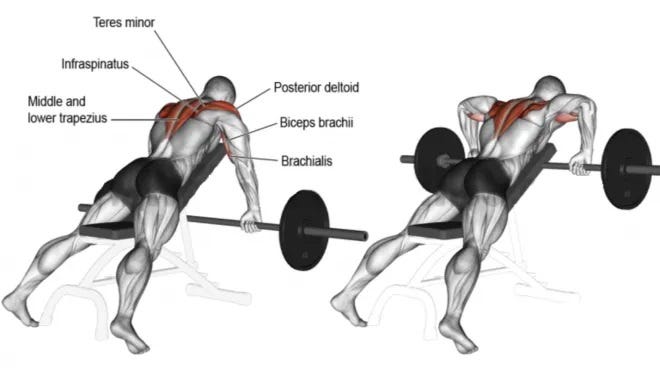
1. Chest Supported Barbell Row

A chest-supported barbell row is an effective variation. As the name suggests, it’s a row where your chest is supported.

By leaning into a bench with your upper torso, you’re removing the need for your back to stabilize the movement. These barbell back exercises will help you build your middle back strength.

You can also try Dumbbell Chest-Supported Row.

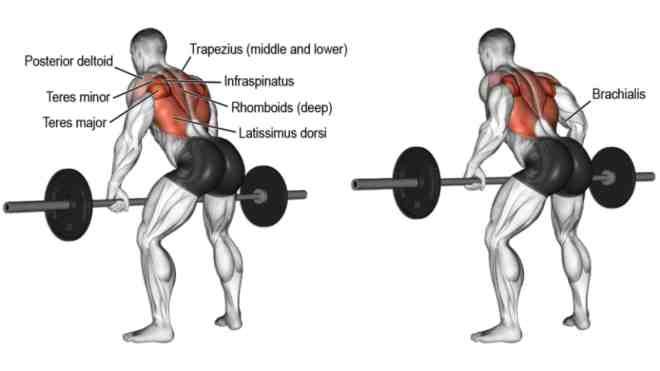
2. Bent Over Barbell Rows

Bent-over barbell rows are a powerhouse exercise for strengthening the upper back and adding significant muscle mass to the region. The angle of your pull determines which muscles are targeted:

  • Pulling the bar higher toward the chest engages the upper latissimus dorsi and trapezius.
  • Pulling the bar along a lower trajectory to touch the abdomen targets the lower lats.

This versatility makes bent-over rows an essential addition to any back workout routine.

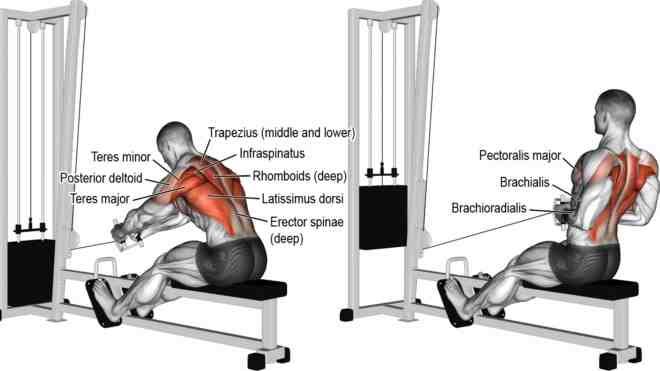
3. Seated Cable Rows

Seated cable rows are excellent for building middle back muscles and engaging the lower lats.

This exercise can be performed using a wide or narrow grip, allowing for versatility in muscle targeting.

It requires a cable rowing machine equipped with separate handles. By maintaining proper form, seated cable rows effectively isolate the back muscles, making them a staple for developing a strong, well-defined back.

For Free Online Tools, try Our New Tools Website brainy tools hub

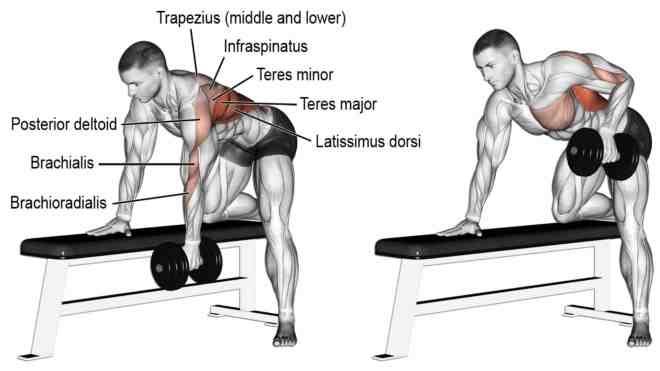
4. One Arm Dumbbell Rows

One-arm dumbbell Rows are a highly effective alternative to chest-supported rows, offering the full range of motion needed to build the latissimus dorsi.

This exercise independently targets each side of the back, providing better muscle isolation and a longer range of motion. One-arm dumbbell rows help build a bigger and stronger back and improve posture.

Their simplicity and effectiveness make them a valuable addition to any workout regimen.

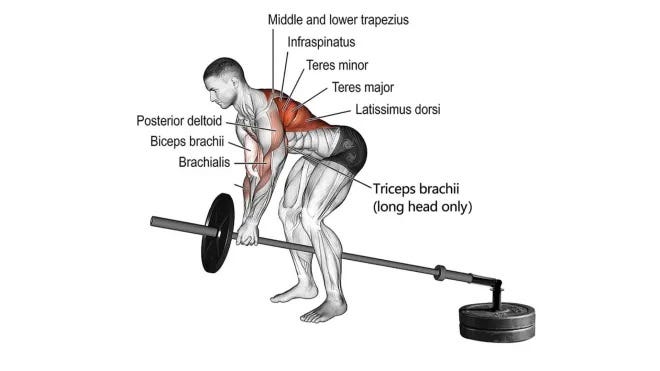
5. T Bar Rows

T bar rows are a power exercise to build middle back muscles. Check the correct execution technique and blast your back muscles. It also works on the outer lats when done with a narrower grip.

T-bar rows are done on a machine or by placing a barbell in the corner. They are tough exercises, but building a strong back is a must to develop a quality physique, stay injury-free, and remain pain-free for life.


Plank Calories Burned Calculator

Plank Exercise Calories Burned Calculate calories burned during plank exercises. Input your detail...